How to Make Rosé
Techniques Behind Our Winemakers Favorite Wine
Hey friends, Kiara here…
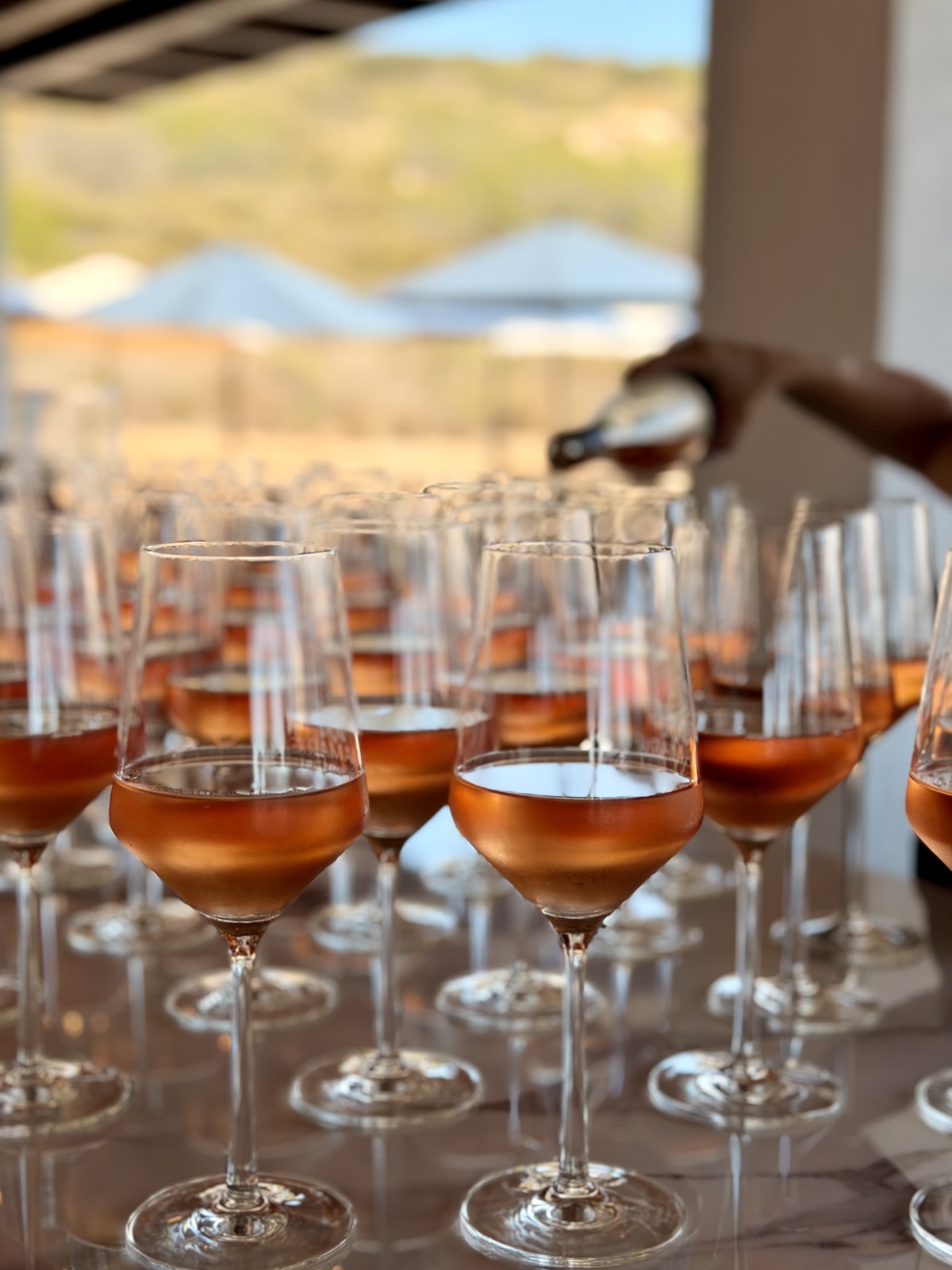
I wanted to jump on and talk about one of my favorite wine styles to make and drink: rosé! Not only is rosé beautiful in your glass, but it is refreshing, which makes it perfect for our amazing San Diego climate. Something I personally love about making rosé is the challenge. In such a light wine, every decision from harvest timing to fermentation can affect the final product. Some rosés come from blending red and white wines, but they’re typically made by removing red grapes from their skins, which gives them a lighter color. There are several methods of rosé winemaking, but today I will mostly focus on what we do here at Mia Marie Vineyards.
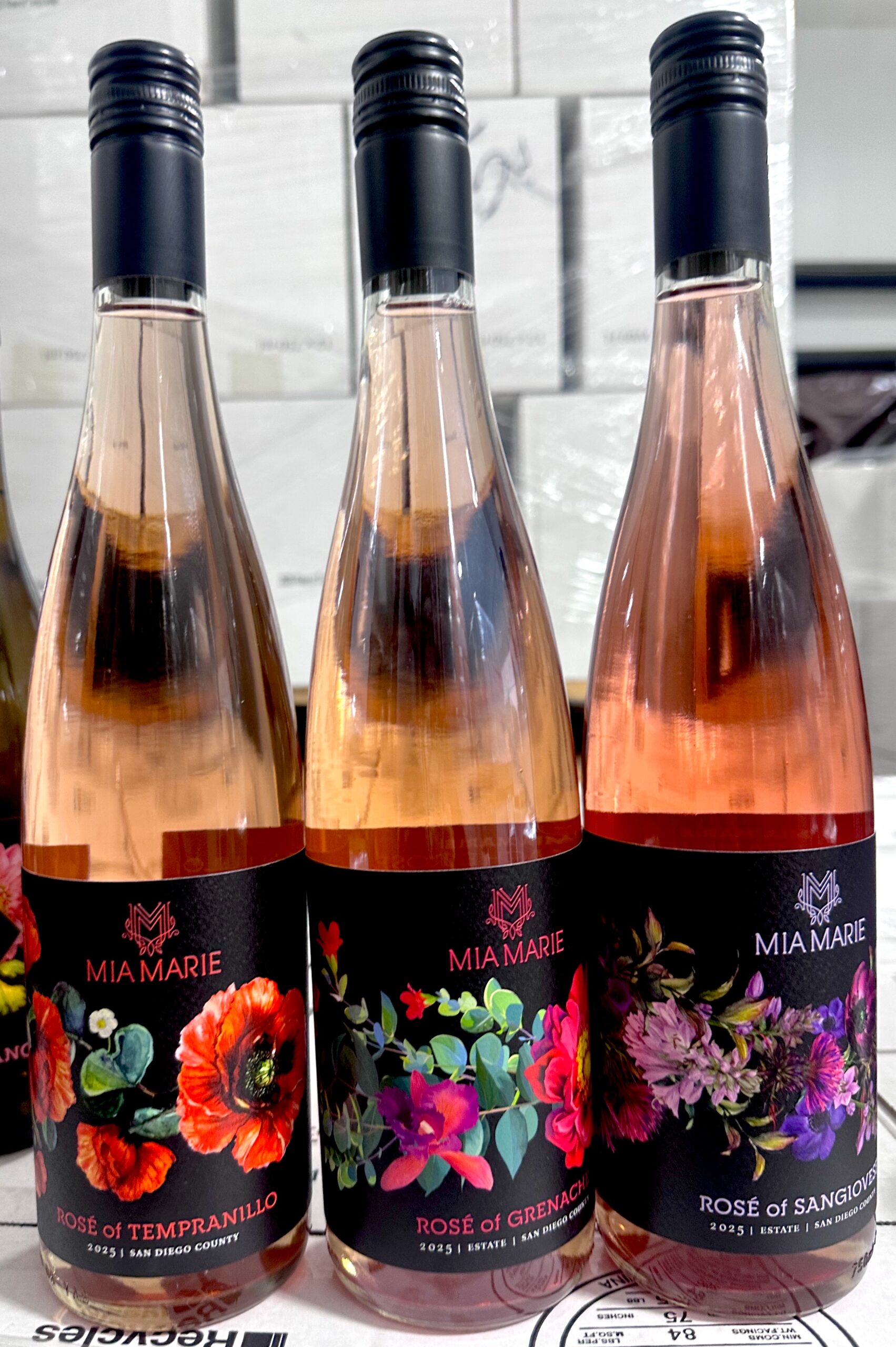
Every winery has their own selection of varieties that they use for rosé from vintage to vintage, and sometimes that may even rotate. Very commonly, you will see Pinot Noir, Syrah, Grenache, and Sangiovese used. Here at Mia Marie, we always do a Rosé of Tempranillo; we have also done Grenache, Sangiovese, Primitivo (Zinfandel), and Montepulciano. How we choose the varieties each vintage can depend on a lot of factors… like any other style of wine, great rosé starts in the vineyard. A huge factor, relative to the vineyard, is how ripe the grapes are going to get. I can often tell early in a season if a block is not going to get to full maturity to be a quality red wine. I know that sounds like bad news, but for someone who loves making a nuanced rosé, it’s really just an opportunity to flex my winemaking muscles. Another factor, of course, is you all! I really do love to hear what our guests enjoy. Our Rosé of Grenache was born because we were getting repeated requests for something for those of you who prefer something on the sweeter side. To all you nay-sayers out there… There is nothing wrong with sweet wine. I always say: the only thing you need to know about wine is what you like to drink.
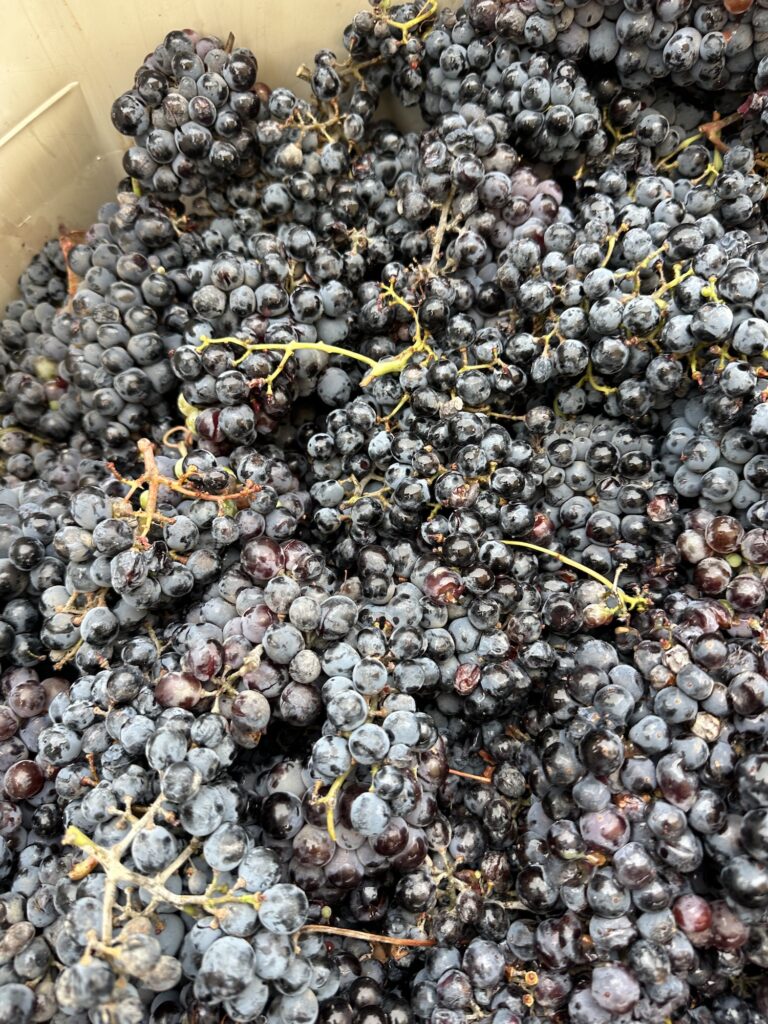
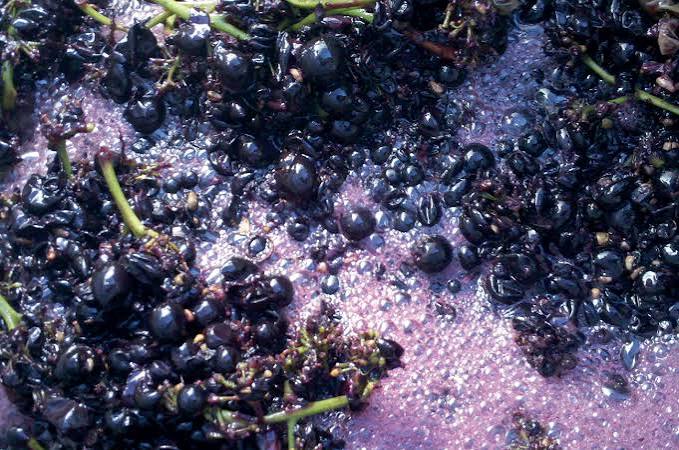
Anyway, I digress. I will step down from my soapbox to discuss a bit about how we make rosé. But first, my favorite disclosure: like any other aspect of winemaking, there are a million ways to make a rosé, and every winery/winemaker will have their own method. Most simply put, here at Mia Marie Vineyards, our rosés are made from red grapes that we process like a white wine. What that means is the red grapes are processed direct-to-press, immediately separating them from their skins; whereas, with a red, the same varietals would be destemmed and fermented on their skins. A huge difference with the harvesting of a rosé is the Brix (sugar) level at which we harvest. For a rosé in comparison to a red, we are looking for much lower Brix and higher acid, so they are typically picked earlier in the season, depending on varietal, of course. Pretty consistently, the portion of our Rosé of Tempranillo that we grow on the estate is one of our first couple picks. Some wineries will leave the juice on skins for a certain number of hours. We did this with our 2024 Rosé of Grenache; the juice spent about 14 hours on the skins, which is why the color is so dark. In 2025, you’ll see that I was shooting for a bit of a lighter color, so only half of the lot spent time on skin, while the rest was direct-to-press. Other factors that can determine color are: ripeness at harvest, hardness of press, and grape variety. Naturally, those factors can also greatly affect aromas and flavors as well. All of these things are just tools in a winemaker’s belt.
Yes, great wine starts in the vineyard, but the next step is critical… fermentation! I have discussed how choices can affect the final wine a bit in previous blogs, but every single decision matters. For this portion, I am going to focus on our Rosé of Tempranillo, since it is one we do every vintage. For this wine, we actually ferment in 3 or 4 different lots, with fruit from 3 different parts of San Diego. Beyond each vineyard bringing its own unique terroir, I also have each block get to different levels of ripeness. Ripeness levels can affect flavor, color, and, of course, alcohol content. Side note, a good example of a vineyard bringing its unique terroir to its wine is our Rosé of Sangiovese; you can very much pick up the sage that grows in that block on the nose. Okay, back to the Tempranillo… Each lot is fermented using a different yeast that targets flavor components that are appropriate for that fruit; for example, one might target fruity or floral esters, while the other might highlight minerality. All of our rosés are fermented cold and slow in stainless steel tanks. Fermentation temperature is key for aromatic preservation in both white and rosé wines. Post-fermentation, the dry wines are blended to create the best possible Tempranillo Rosé. On the vintages that we do the Cheeky Pet-Nat, I usually choose one of the lots that will make the best sparkling and only pull from that tank when bottling, so there is greater variation between the two wines. If you are curious about that process, I wrote a blog about it earlier this year.
Unsurprisingly, I got a bit long-winded about my favorite style of wine, so cheers to you if you are still reading along. Hopefully I have given you an insight into how I approach the making of our rosé wines from the vineyard to the cellar. If you have any more questions for me, I highly recommend booking one of our monthly Estate Tours and coming to taste the results of the process for yourself 🙂 Hope to see you all soon!