Hey ya’ll, Kiara here! I wanted to talk a little bit about the style of sparkling wine we make here at Mia Marie Vineyards. People often ask me how Pét-Nat differs from Champagne, and that really is a great and easily answered question! First, to have the title of Champagne, the wine must quite literally be from Champagne, France. Beyond that, these two styles of sparkling wines are made utilizing different methods. Let’s jump a little more into those …
Traditional Champagne and sparkling wines are made in the “traditional method” or “method champenoise.” With this approach, the base wine ferments dry. Next is a step called dosage, where the winemaker adds a yeast and sugar blend (liqueur de tirage) to this wine in the bottle and lets it go through a second fermentation to achieve carbonation. From here, you often let the wine sit with the yeast, for how long depends on the style you are going for, before disgorging, which I will talk about this process in the next paragraph; big champagne houses typically wait several years. Wines like Prosecco are made using a different style, called the Charmat method, where the wine is tank-carbonated, but I am not going to delve into that today.
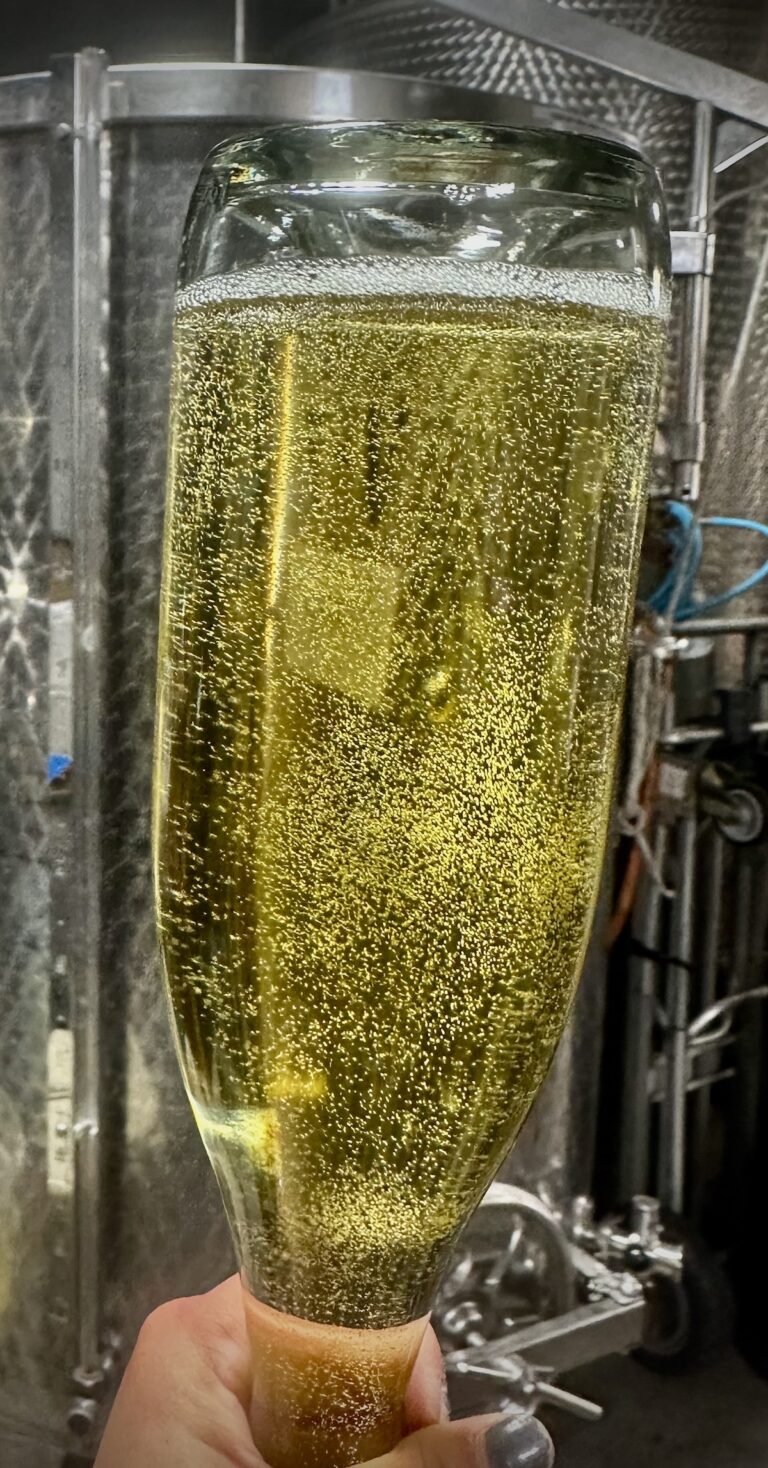
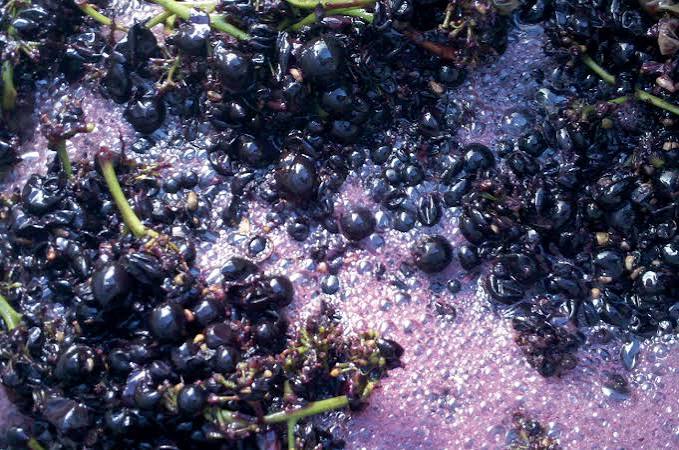
So, what is Pét-Nat? Méthode ancestral wine, or Pét-Nat, is short for the French “pétillant naturel” which translates to naturally sparkling. These wines get their name because they are bottled before finishing fermentation, allowing the wine to trap the CO2 created by the last of the fermentation to carbonate the wine. We usually bottle ours somewhere between 1.3 and 2.0 brix. Yes, that means we are bottling at the will of the fermentation! One vintage, we bottled our Cheeky Rosé at 2 AM. Pét-Nat can be a spooky style of producing sparkling wine for some winemakers because you relinquish control of the final stage of fermentation. As a San Diego native winemaker, I wanted to pay homage to the booming natural wine scene here in San Diego. Pét-Nats, by nature, are unfiltered, low-intervention, and typically small-batch. Additionally, we don’t add sulfur to our Pét-Nats. Post-fermentation, after the wines have settled upside down for a couple of months, all of the yeast from fermentation gathers in the neck of the bottle. At this point, we go through an optional process called disgorging. We freeze the neck of the bottle and use the built-up pressure to shoot out the frozen yeast plug, leaving behind a nice, clean wine for you all!
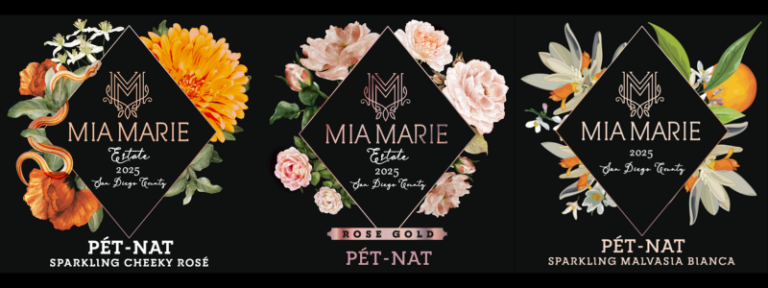
We are always expanding our Pét-Nat program. In the past, we rotated each vintage between Grenache Blanc and our Cheeky Tempranillo Rosé, but this past vintage (2025), we totally switched it up! As seen on our most recent menu, the 2025 Cheeky Rosé Pét-Nat is back. Soon to come and new to our menu this year is our 2025 Malvasia Bianca Pét-Nat! Like last year’s still wine, we did ferment this wine with some skin-contact to accentuate those beautiful floral esters, which is a huge varietal characteristic. I think this is going to be a really unique, yet delicious wine!
Something else we will be launching this year for our Rose Gold members is a Rose Gold exclusive Pét-Nat! Coming in your November shipment, as it is currently going through an extra step called riddling. Riddling is a step where the wines are laid on their sides (or traditionally at an angle), and rotated about 10 degrees weekly, so every part of the wine makes contact with the lees (yeast) to add complexity before the wine is prepared for disgorging. This Pét-Nat is a very small production wine, and I can’t wait for you all to try it.
As always, if you ever want to come learn more about what we are doing down here in the cellar, check out our Estate Winery Tour and get some one-on-one time with me or our Cellar Master, Kelly 🙂 Cheers friends!