Hey all, Kiara here! I wanted to jump on here to answer a question we get relatively often: What is Carbonic Maceration? A bit of a disclaimer: there are endless winemaking techniques, so every winery does have their own way of doing things.
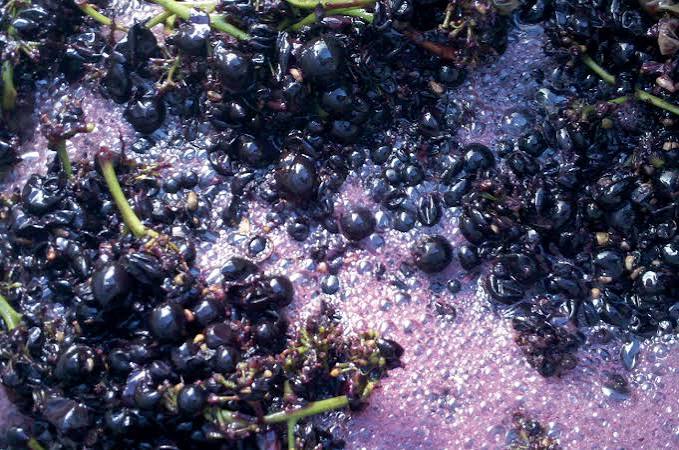
I actually want to start by briefly discussing traditional red wine fermentation before jumping into Carbonic Maceration. Traditionally, red grape clusters will come in from the vineyard, and we will start by sending them through our destemmer. The destemmed berries are then moved to their fermentation vessel (usually an open-top tank or fermentation bin) where they are inoculated with yeast. Depending on what vessel the ferment is happening in, and winemaking style, the ferments will have punchdowns or pumpovers performed on them twice a day to keep the juice/wine in contact with the skin for the duration of the fermentation. Red wines get much of their flavor, texture, and all of their color from their skin, so this step is crucial. The amount of time spent on skin is up to the winemaker. Mia Marie reds typically spend about a month on their skin, unless I choose to do an extended maceration. So, now that we have gone through the wine fermentation process… What is carbonic maceration?
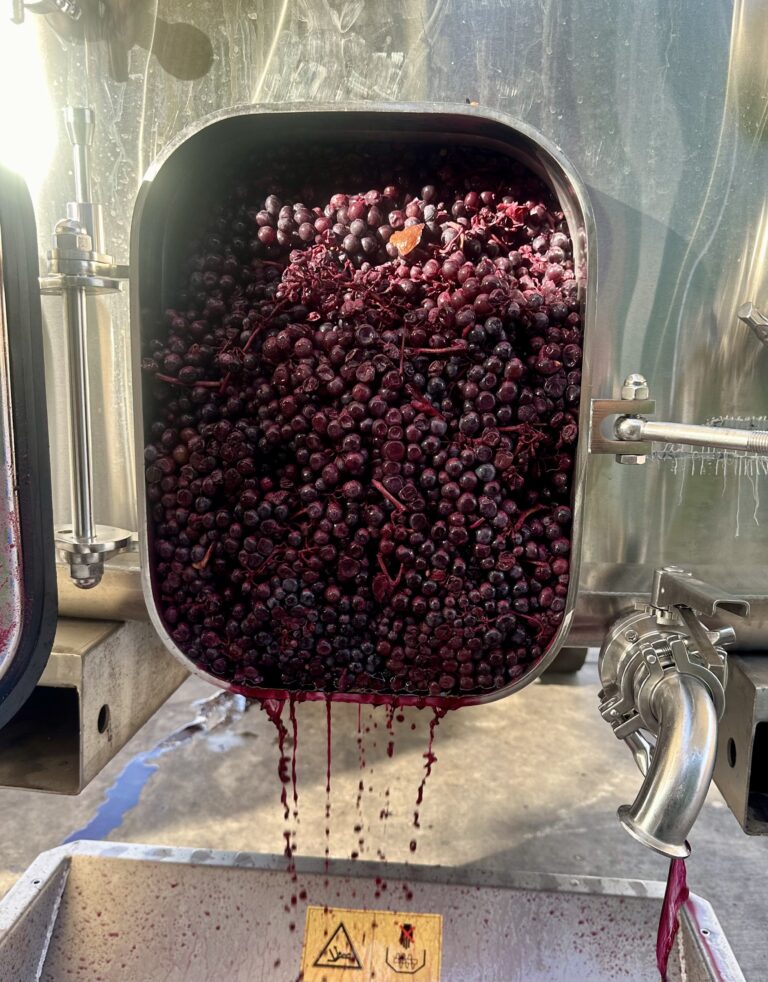
Carbonic Maceration is a style of whole-cluster fermentation made popular in Beaujolais, France. Freshly harvested, whole clusters are put into a tank; the tank is then sealed. At this point, I connect our Carbon Dioxide tank and pump a nice amount of CO2 into that tank to create a completely anaerobic environment. The CO2 will react with an enzyme inside the grapes, triggering an intracellular fermentation. So basically, the grapes will start to ferment from the inside out. I like to leave this tank sealed for about 3 weeks before draining, pressing, and letting that wine finish fermentation (off-skin). With the lack of direct skin-contact that you would get in a traditional red fermentation, you are left with a light-bodied, fruit-forward, and low-tannin red wine. Something that I enjoy about carbonic wines is that they are also usually a chillable red, which fits right in here in San Diego wine country!
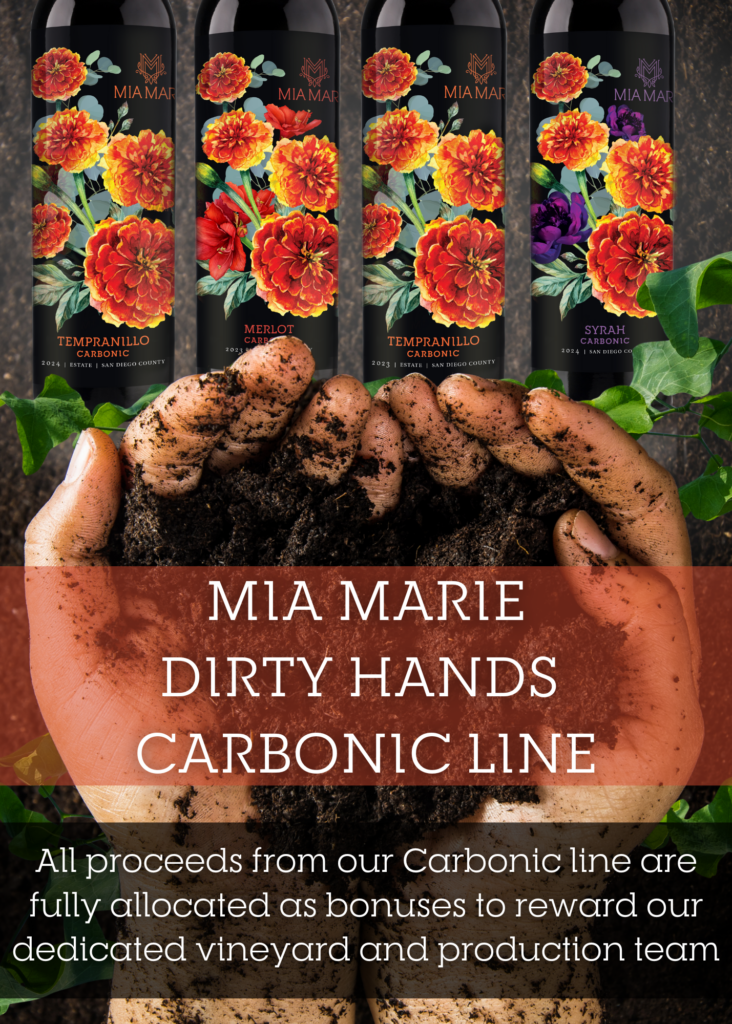
Here at Mia Marie, we make several different wines using carbonic maceration. The one we do most often is the Carbonic Tempranillo; we have also done Syrah, Merlot, and a Bordeaux Blend (coming soon)! Something I am proud to highlight about our carbonic lineup is: “We dedicate this wine to the hard-working women and men of Mia Marie Vineyards. To recognize their passion for the craft, commitment, and dedication to grape growing and winemaking, 100% of the sales go directly to our crew who get their hands dirty daily.”
As always, if you want to learn more about our fermentation processes, I recommend booking one of our Estate Tours so you can come chat with me in our cellar 🙂 Talk to you all soon!